Home Pest Control Guide: How to Prevent, Identify & Get Rid of Pests
- by Parul Yadav
- October 1, 2026
- 0
- 14
Home pest control means preventing, identifying, monitoring, and removing unwanted pests from your home. Effective pest control for homes starts with controlling food and moisture, maintaining the property, and sealing suitable entry points. Traps, baits, and targeted treatments can help with specific problems, while professional help may be appropriate for persistent, widespread, or difficult infestations.
Pests enter homes because they can find food, water, shelter, warmth, or suitable ways inside. Common warning signs include droppings, property damage, nests, unusual sounds or odors, and repeated sightings. This guide explains how household pest control works, how to prevent infestations, how to inspect your home, when DIY methods make sense, and when professional pest management may be appropriate.
What Is Home Pest Control?
Home pest control is a combination of prevention, inspection, identification, treatment, and monitoring. It is not simply about spraying chemicals whenever you see an insect or rodent. The Environmental Protection Agency describes integrated pest management, or IPM, as an approach that emphasizes prevention, monitoring, identification, and appropriate control methods.
A practical home pest prevention strategy follows a simple process:
Identify → Inspect → Prevent → Monitor → Treat
Pest Prevention
Prevention focuses on removing the conditions that allow pests to enter or survive. This includes controlling food and moisture, sealing suitable openings, reducing unnecessary clutter, and maintaining areas around the home.
Common prevention measures include:
- Control food: Store food securely and clean crumbs, spills, and food residue
- Control water: Repair leaks and address persistent moisture
- Seal openings: Close suitable gaps around doors, windows, foundations, and utility penetrations
- Reduce shelter: Keep storage areas organized and remove unnecessary clutter
- Maintain the property: Address drainage, vegetation, screens, doors, and other potential access points
These steps cannot guarantee that pests will never enter your home, but they can reduce the conditions that support pest activity.
Home Inspection
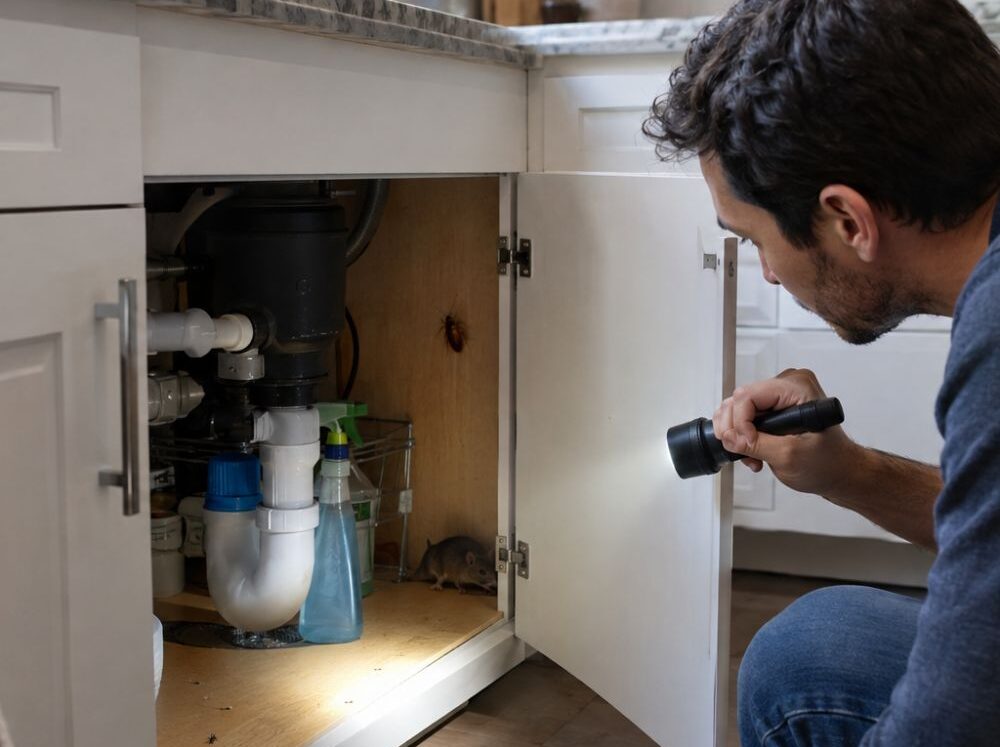
A home inspection looks for both pests and evidence of their activity. Start with areas where food, water, warmth, shelter, or entry points are available.
Check:
- Under sinks and around plumbing
- Behind and beneath appliances
- Inside cabinets and pantry areas
- Around exterior doors and windows
- In garages, basements, and attics
- Around foundations and exterior walls
- Near garbage and food-storage areas
A flashlight, inspection mirror, or inspection camera can make dark or difficult areas easier to examine.
Pest Identification
Identify the pest before choosing a treatment whenever possible. Different pests have different behaviors, hiding places, food sources, and control methods, so treating the wrong pest can waste time and leave the underlying problem unresolved.
If you cannot confidently identify an unfamiliar pest, consider getting help from a qualified pest professional or a reliable local university extension resource.
Pest Treatment or Removal
Treatment should match the pest and the conditions supporting it. Depending on the situation, control may involve:
- Physical exclusion
- Sanitation
- Traps
- Baits
- Monitoring
- Removing accessible food or shelter
- Targeted pesticide use
- Professional pest management
If you use a pesticide, read and follow the product label. EPA guidance explains that pesticide labels provide directions and precautions for using products legally and safely.
Monitoring
Monitoring tells you whether your control measures are actually addressing the problem. Continue checking for new sightings, fresh droppings, damage, active trails, nests, trap activity, or other signs associated with the pest.
If activity continues, reassess the pest identification and look again for an overlooked entry point, food source, moisture problem, or shelter area.
Why Do Pests Enter Homes?
Pests enter houses when the building provides resources or conditions that support them. Food, water, shelter, warmth, and accessible openings can all contribute to pest activity.
Understanding what attracts pests to your home helps you address the underlying conditions instead of relying only on sprays or other treatments.
Food
Many household pests are attracted to accessible food and food residue. Common sources include:
- Unsealed pantry foods
- Crumbs and spills
- Pet food
- Dirty dishes
- Food residue on counters or floors
- Open garbage
- Food waste
Store vulnerable foods in suitable sealed containers, clean spills promptly, and avoid leaving pet food exposed longer than necessary.
Water and Moisture
Moisture can create favorable conditions for various household pests. Check for:
- Leaking faucets or pipes
- Plumbing problems
- Condensation
- Standing water
- Damp basements or crawl spaces
- Poor exterior drainage
- Clogged gutters or downspouts
Fix the source of the moisture rather than simply drying the visible water. A dehumidifier can help manage excess humidity in appropriate spaces, but it does not replace plumbing, drainage, or building repairs.
Shelter
Homes contain many protected spaces where pests can hide or nest. These include wall voids, attics, basements, crawl spaces, garages, cluttered cabinets, storage boxes, and areas beneath appliances.
Keeping storage areas organized makes these locations easier to inspect and reduces places where pests can remain undisturbed.
Easy Access
Small openings can provide convenient entry routes. Check doors, windows, screens, foundation openings, utility penetrations, pipe openings, vents, roof areas, and garages.
Sealing appropriate openings is an important part of pest prevention, but the correct repair depends on the location and type of opening.
Common Household Pests
Different household pests leave different clues, and the correct response depends heavily on the pest involved. A quick identification check can help you determine where to investigate and whether the problem may require a specialized approach.
Not every pest requires the same response. Ants may be associated with food, moisture, or nesting sites, while rodent control requires attention to food sources and entry points. Termite evidence can involve concealed activity, so suspected termites deserve a different level of investigation.
This article provides an overview of common household pests. The Handy Vibes can build dedicated guides for individual pest problems, including identification, prevention, treatment options, and when to call a professional.
Cockroaches
Cockroaches often hide in dark, protected locations, especially where food and moisture are available. Inspect cabinets, areas under sinks, spaces behind appliances, plumbing areas, bathrooms, and kitchens.
Droppings, egg cases, and repeated sightings can provide useful evidence of ongoing activity.
Ants
Ants commonly appear near food and moisture sources. When you see a trail, follow it when practical and look for where the ants enter the building and where they travel afterward.
The appropriate response can vary by ant species and nesting location, so identification matters before choosing a treatment.
Rodents
Rodents can leave several types of evidence, including:
- Droppings
- Gnaw marks
- Nesting material
- Damaged food packaging
- Grease or rub marks
- Scratching or scurrying sounds
The CDC recommends measures such as sealing openings and removing food sources when preventing rodent infestations.
Termites
Termites can damage wood while remaining concealed from view. Potential signs include mud tubes, damaged wood, discarded wings, and other evidence of termite activity.
If you suspect termites, investigate the evidence rather than relying on visible insects alone.
Bed Bugs
Bed bugs are commonly associated with sleeping and resting areas. Inspect mattress seams, box springs, bed frames, furniture seams, and cracks near sleeping areas.
Possible evidence includes live insects, shed skins, blood spots, and fecal spotting.
Flies
Flies can indicate accessible food, waste, organic material, or moisture. Instead of focusing only on adult flies, look for the source of the activity.
Depending on the species, drains, garbage, food, and other organic material may deserve inspection.
Spiders
Spiders may be more noticeable where insects are plentiful because insects provide a potential food source. Inspect corners, garages, basements, storage areas, and exterior locations.
Reducing conditions that support insect activity can also help reduce some of the food sources available to spiders.
How to Tell If You Have a Pest Infestation
One isolated pest sighting does not automatically mean your home has an infestation. Repeated sightings, multiple pests, or recurring physical evidence provide stronger reasons to investigate.
Look for the following signs.
Droppings and Other Waste
Droppings can indicate rodents or certain insects. Check cabinets, pantry areas, wall edges, garages, attics, basements, and other areas where activity has been noticed.
Avoid direct contact with unknown droppings. Rodent-contaminated areas require appropriate cleanup precautions. CDC: Cleaning Up After Rodents
Gnaw Marks and Property Damage
Fresh gnaw marks can indicate rodent activity. Check food packaging, stored materials, wood, and other areas where unexplained damage appears.
Damage alone does not identify a pest, so look for additional evidence before deciding what treatment is appropriate.
Nests, Egg Cases, and Shed Skins
Nesting material can indicate rodents or other animals, while egg cases and shed skins can help identify certain insects.
Inspect quiet, protected spaces where pests are less likely to be disturbed. Multiple signs in the same area provide more useful information than a single unexplained object.
Unusual Sounds and Odors
Scratching, scurrying, or movement inside walls and ceilings can indicate animal activity, although sound alone cannot identify the pest.
Persistent unexplained odors can also justify further inspection. Consider the location, timing, and other physical evidence before drawing conclusions.
Live or Dead Pests
A live pest can provide useful identification information, and a dead insect may be equally useful. If identification is necessary, take a clear photograph or preserve the specimen safely rather than immediately discarding it.
Damaged Food Packaging
Rodents and some insects can damage stored food. Check packages for:
- Holes
- Chewed edges
- Openings
- Contamination
- Droppings nearby
Discard food that has been contaminated by pests.
Grease or Rub Marks
Rodents can leave dark marks along frequently traveled surfaces. Check baseboards, walls, and narrow travel routes when rodent activity is suspected.
Repeated Pest Sightings
Repeated sightings deserve more attention than an isolated encounter. Record where and when you see the pest, because a pattern can help reveal its entry point, food source, nesting area, or preferred hiding place.
How to Prevent Pests in Your Home
The most practical approach to how to prevent pests in your home combines food control, moisture management, exclusion, sanitation, and property maintenance.
Store Food Properly
Keep food inaccessible to pests whenever practical. Dry goods should be stored in suitable sealed containers, while pet food and food waste should remain properly contained.
Also check pantry packages regularly and clean food residue from countertops, floors, and other preparation areas.
Keep the Kitchen Clean
Clean dishes, counters, floors, and food-preparation areas regularly. Pay particular attention to spaces beneath and behind appliances where crumbs, grease, and food debris can accumulate.
Manage Garbage
Use suitable garbage containers with secure lids and remove food waste regularly. Clean containers when spills or residue accumulate.
Fix Leaks and Control Moisture
Repair plumbing leaks promptly and inspect areas around sinks, toilets, water heaters, basements, crawl spaces, gutters, and downspouts.
Persistent moisture may require plumbing, drainage, waterproofing, or other building repairs rather than pest treatment alone.
Seal Cracks and Gaps
Inspect openings around doors, windows, pipes, cables, foundations, and other penetrations. Small gaps may be suitable for an appropriate sealant, while larger openings may require mesh, hardware cloth, or another physical barrier.
Do not block vents or openings that are necessary for safe building operation.
Maintain Screens and Doors
Damaged screens can make insect entry easier. Repair holes and check that screens fit properly, including basement windows and less frequently used openings.
For exterior doors, inspect weather stripping and the gap beneath the door. A suitable door sweep can help reduce some gaps.
Reduce Clutter
Clutter provides hiding places and makes pest evidence harder to detect. Organize storage areas and maintain enough access to walls, floors, corners, and other inspection areas.
Maintain Your Yard
Outdoor conditions can affect pest activity around the home. Manage standing water, yard debris, garbage, drainage problems, outdoor storage, and vegetation around the structure.
Store Firewood and Outdoor Materials Properly
Avoid creating large piles of material against exterior walls. Store firewood appropriately and keep outdoor materials organized so you can inspect behind and beneath them.
Keep Vegetation Away From the House
Trim vegetation that touches or heavily surrounds the structure. Maintain enough visibility around foundations, windows, doors, and other exterior areas to inspect for gaps and pest activity.
Inspect the Home Regularly
Routine inspections can help you notice problems earlier. During normal home maintenance, look for new cracks, moisture, damaged screens, droppings, food damage, nests, structural openings, and repeated pest activity.
How Do Pests Get Into Your House?
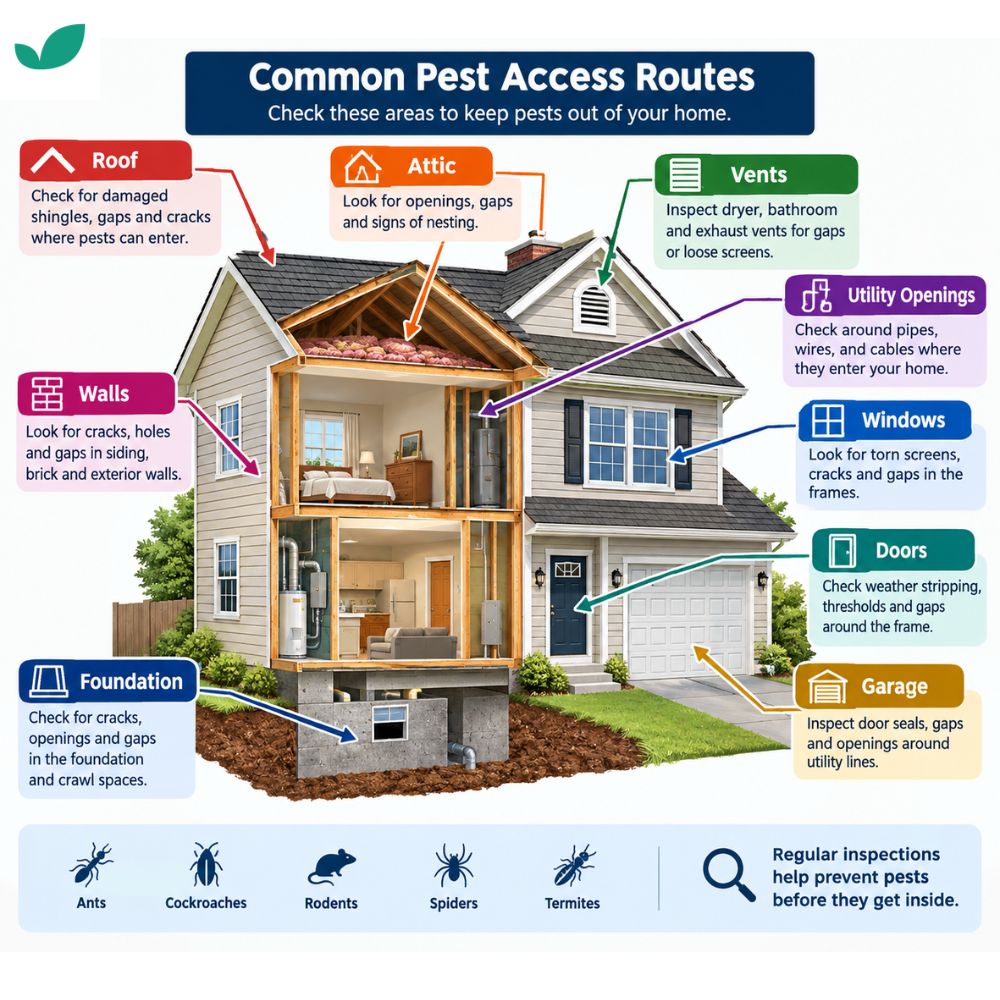
Pests commonly enter through doors, windows, cracks, utility openings, vents, garages, foundations, and roof areas. Finding these routes is an important part of how to keep pests out of your house.
Common Entry Points
Pay particular attention to:
- Exterior doors and door frames
- Window frames and damaged screens
- Foundation cracks and openings
- Plumbing and utility penetrations
- Vents and other exterior openings
- Garage-door edges
- Roof, soffit, and attic openings
- Gaps around pipes and cables
Do not seal an opening simply because it looks like a possible pest route. First determine whether it is actually being used and whether the opening serves a necessary building function.
How to Find Where Pests Are Entering Your Home
Use the location of pest activity as your starting point.
- Start where you see activity
- Follow trails or other physical signs when possible
- Inspect nearby cracks and gaps
- Check the exterior directly outside the affected area
- Inspect doors, windows, vents, and utility penetrations
- Seal confirmed entry points using an appropriate method
If wildlife may be inside an attic, wall, or another enclosed area, do not seal the opening blindly. Confirm the situation first so you do not trap an animal inside.
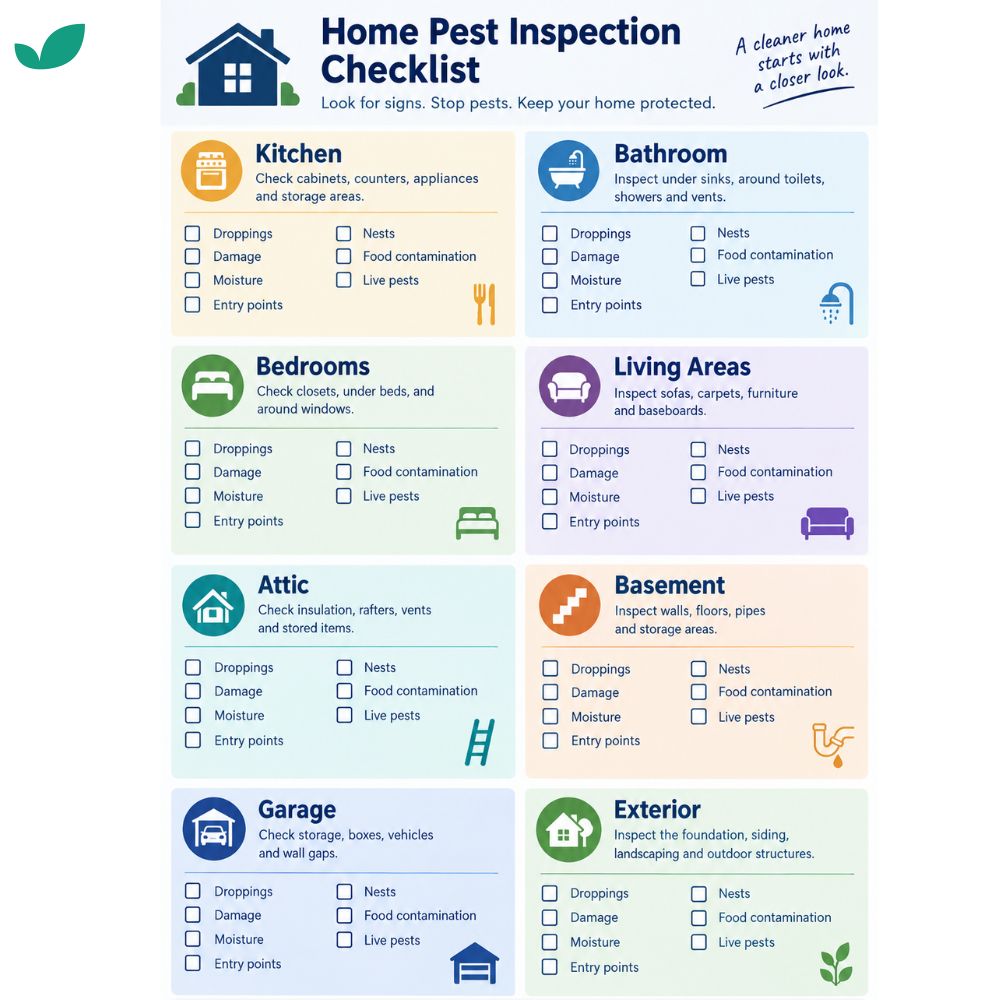
Home Pest Inspection Checklist
A room-by-room inspection makes household pest control easier to manage. You do not need specialized equipment for a basic inspection, although a flashlight can make dark areas much easier to examine.
Kitchen
Check:
- Cabinets and pantry shelves
- Under and behind appliances
- Under the sink
- Plumbing connections
- Food-storage areas
- Garbage areas
- Baseboards and corners
Look for droppings, trails, damaged packaging, insects, moisture, and unexplained odors.
Bathroom
Inspect:
- Under sinks
- Around pipes
- Drains
- Plumbing penetrations
- Cabinets
- Cracks and gaps
- Moisture-prone areas
Pay attention to recurring moisture rather than treating only the visible water.
Bedrooms and Living Areas
Check:
- Baseboards
- Windows
- Furniture
- Closets
- Wall openings
- Spaces behind or beneath furniture
For suspected bed bugs, inspect mattresses, bed frames, furniture seams, and nearby cracks carefully.
Attic and Basement
Look for:
- Droppings
- Nests
- Moisture
- Damaged wood
- Entry openings
- Disturbed materials
- Unusual odors
These areas can reveal evidence that is not visible in occupied rooms.
Garage
- Inspect
- Garage-door edges
- Corners
- Cabinets
- Stored materials
- Food storage
- Rodent signs
- Exterior penetrations
Keep storage organized so walls and corners remain accessible.
Exterior
Walk around the property and inspect:
- Foundation
- Doors and windows
- Standing water
- Drainage
- Vegetation
- Cracks and gaps
- Utility penetrations
- Outdoor storage
- Roof and attic access points
Exterior inspections can reveal potential problems before they become obvious indoors.
How Often Should You Inspect Your Home for Pests?
There is no universal inspection schedule for every property. Inspection needs vary with climate, property condition, pest history, moisture, housing type, vegetation, and the specific pest involved.
A practical approach is to combine routine observation with more deliberate monthly and seasonal checks.
During Normal Home Maintenance
Watch for obvious signs during cleaning, repairs, and other household tasks. Pay attention to repeated sightings, new damage, droppings, food contamination, unexplained odors, and moisture problems.
Monthly
Inspect vulnerable areas more deliberately, especially:
- Under sinks
- Storage areas
- Garages
- Exterior doors
- Screens
- Moisture-prone locations
- Areas with previous pest activity
Seasonally
Use seasonal home maintenance as a pest inspection opportunity. Check exterior walls, foundations, drainage, vegetation, attic and roof areas, doors, windows, screens, and new cracks or gaps.
Pest activity varies by species and region, so local seasonal patterns matter.
Whenever You See Signs
Investigate pest evidence promptly rather than waiting for the next scheduled inspection. This is especially important when you find repeated activity, significant damage, or signs that suggest a larger problem.
How Pest Problems Vary by Region and Season
Pest activity is not identical across the United States. Climate, temperature, rainfall, vegetation, housing conditions, property age, moisture, and local pest species can all affect the types of problems homeowners encounter.
Seasonal activity also varies between pests and regions. Some insects become more noticeable during warmer periods, while rodents and other animals may seek shelter indoors when outdoor conditions change.
Instead of following a pest-control schedule designed for another part of the country, consider the conditions around your own property. Useful seasonal checks include:
- Inspecting screens before warmer weather
- Checking exterior gaps
- Reviewing drainage after heavy rain
- Checking attics and garages
- Managing standing water
- Inspecting stored outdoor materials
- Watching for new pest activity after major weather changes
Local university extension programs can provide more specific information about pests common in your area.
DIY Pest Control vs. Professional Pest Control
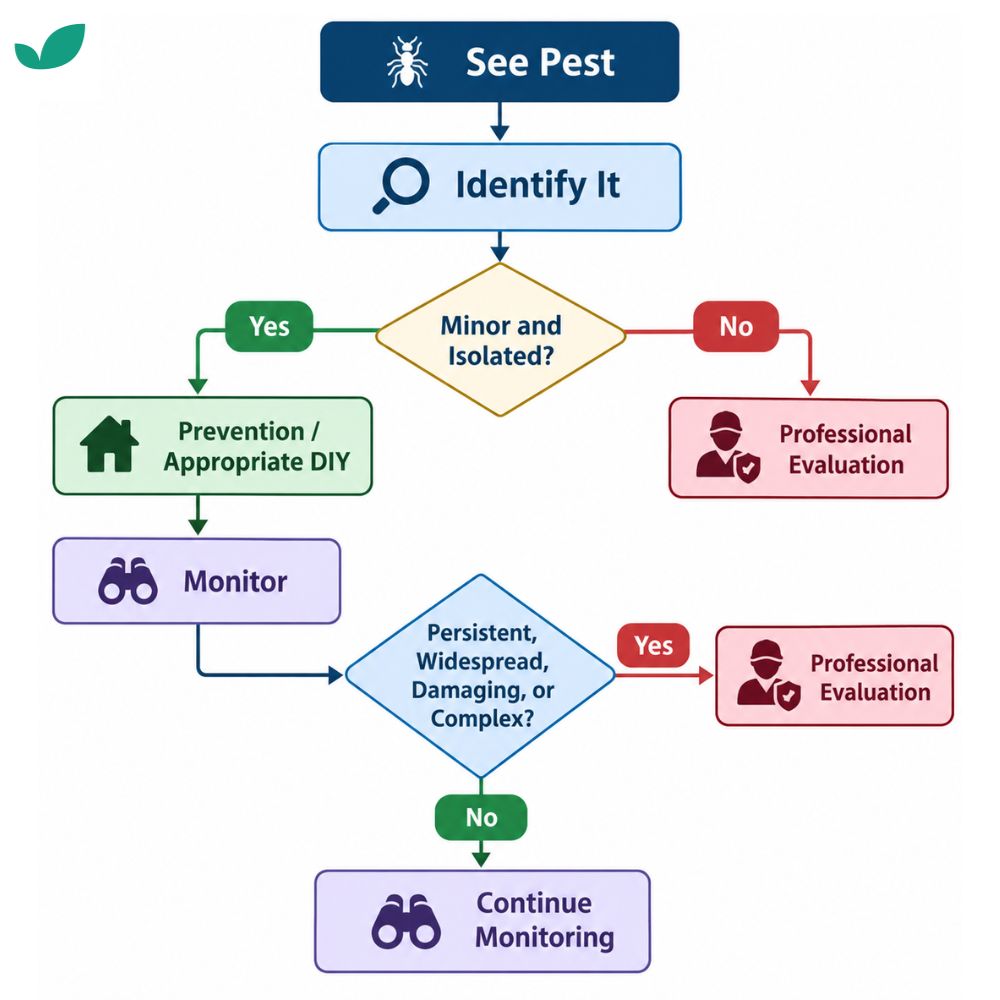
DIY home pest control can be suitable for some minor, identifiable problems, particularly when the underlying source can be addressed. Professional pest control may be appropriate when activity persists, the problem is widespread, access is difficult, or the pest creates a significant property or safety concern.
When DIY Makes Sense
Start with practical measures that address the conditions supporting the pest. Depending on the situation, these may include sanitation, food storage, moisture control, sealing suitable entry points, traps, baits, monitoring, and removing accessible shelter.
For pesticide products, always follow the product label and use the product only as directed.
Where DIY Control Has Limits
DIY treatment becomes more difficult when:
- The pest is unidentified
- Activity keeps returning
- The infestation is hidden
- Pests are inside inaccessible spaces
- Property damage is occurring
- Multiple reasonable control attempts have failed
- The situation creates a safety concern
Using more pesticide does not necessarily solve the problem. If pests still have access to food, water, shelter, or an entry point, activity may continue.
Common Pest Control Mistakes to Avoid
Good pest management depends on addressing the underlying problem and using control products correctly. Several common mistakes can make pest problems harder to manage.
Using Pesticides Before Identifying the Pest
Different pests require different approaches. Identify the pest before selecting a treatment whenever practical.
Applying More Product Than the Label Allows
More pesticide does not automatically mean better control. Follow the product label for application, location, amount, storage, and safety instructions.
Mixing Pesticides or Household Chemicals
Do not mix pesticides or household chemicals unless the product label specifically directs you to do so. Unexpected chemical reactions can create serious hazards.
Using Outdoor Pesticides Indoors
A product intended for outdoor use should not automatically be used inside. Use pesticides only in the locations and manner permitted by the product label.
Relying Entirely on Sprays
Spraying may address visible pests without fixing the underlying cause. Food, moisture, shelter, and entry points still need attention.
Ignoring Moisture Problems
Repeated pest activity around leaks or damp areas can continue if the moisture source remains. Fix the underlying water problem whenever possible.
Sealing an Opening Without Checking What Is Inside
Do not blindly seal an opening that may be used by wildlife or another animal. First determine whether something is inside and whether exclusion should be handled differently.
Treating Every Pest Sighting as an Infestation
An isolated pest does not automatically indicate an established infestation. Look for patterns and supporting evidence before escalating treatment.
Ignoring Recurring Activity
Temporary improvement is not the same as solving the problem. If pests return repeatedly, investigate the source, entry point, food supply, moisture, or nesting location.
Ignoring Product Instructions
Read the label before using a pesticide, trap, bait, or other pest-control product. Follow directions for placement, application, storage, disposal, and precautions.
Using Traps or Baits Without Considering Placement
Placement matters. Follow product instructions and keep traps or baits away from children and pets as directed.
When Should You Call a Pest Control Professional?
Consider professional help when pest activity continues despite reasonable prevention and control efforts. Professional evaluation can also be useful when the pest is difficult to identify, the infestation is widespread, access is difficult, or property damage is occurring.
Situations that may justify professional attention include:
- Persistent pest activity
- Widespread infestation
- Suspected termite activity
- Significant rodent activity
- Difficult-to-access nests
- Activity inside walls or ceilings
- Significant property damage
- Stinging insects creating a safety concern
- Uncertainty about safe treatment
- A situation you do not feel comfortable handling
Professional treatment is not automatically necessary for every pest sighting. When contacting a company, ask what pest they identified, what evidence they found, what treatment they propose, and what follow-up is included.
For structural, electrical, gas, roofing, or other hazards outside ordinary pest management, contact the appropriate qualified professional.
How Much Does Home Pest Control Cost?
There is no single nationwide price that accurately represents every pest-control job. Home pest control cost depends on factors such as pest species, property size, infestation severity, location, treatment method, number of visits, and service terms.
For that reason, compare the scope of work rather than looking only at the advertised price.
What Affects Pest Control Cost?
Common factors include:
- Pest species
- Property size
- Infestation severity
- Geographic location
- Treatment method
- Number of visits
- One-time versus recurring service
- Follow-up requirements
- Warranty terms
- Preparation requirements
A minor insect problem and a complex rodent exclusion project can involve very different services.
Questions to Ask Before Paying
Before hiring a company, ask:
- What exactly is included?
- Is this one-time or recurring service?
- Are follow-up visits included?
- Is there a warranty or guarantee?
- What preparation is required?
- Are there additional charges?
- What happens if pest activity continues?
- Which pests are covered?
Ask for the scope of work in writing when practical.
How to Choose a Pest Control Company
Choosing a pest-control company involves more than comparing the initial price. Homeowners should understand the pest, proposed treatment, service scope, follow-up plan, and safety requirements.
Check Licensing and Credentials
Pesticide applicator requirements vary by state. Check the appropriate state regulatory agency for licensing requirements and verify credentials where applicable.
Ask for an Inspection
Ask the company to explain what evidence supports the diagnosis. You should understand what pest they identified and where they found evidence.
Ask What Treatment Is Proposed
Ask about:
- Treatment method
- Areas being treated
- Products being used
- Follow-up visits
- Preparation
- Safety instructions
- Expected results
You should understand the proposed service before agreeing to it.
Understand Follow-Up Visits
Some pest problems require monitoring or additional treatment. Ask when follow-up is recommended and whether it is included in the quoted service.
Compare Quotes Based on Scope
Two quotes may cover different services. Compare inspection, treatment, follow-up, warranty terms, covered pests, preparation, and exclusions rather than comparing only the headline price.
Ask About Guarantees
If a company offers a warranty or guarantee, ask exactly what it covers. Check its duration, exclusions, response process, and any additional fees.
Ask About Home Preparation
Some treatments require preparation. Ask whether you need to:
- Remove or cover food
- Secure pets
- Cover or remove certain items
- Leave a treated area
- Make other changes before treatment
Request written instructions when possible.
Understand Safety Instructions
Follow the company’s instructions and the pesticide label. Keep children and pets away from treated areas whenever required by the product label or service instructions.
Simple Home Pest Prevention Routine
A simple routine makes pest prevention easier to maintain without turning pest control into a daily chore.
Weekly
- Clean food spills
- Check garbage areas
- Store exposed food
- Look for visible pest activity
- Remove accessible standing water
Monthly
- Check exterior entry points
- Inspect under sinks
- Check storage areas
- Look for droppings and damage
- Inspect screens and door seals
- Check recurring moisture areas
Seasonally
- Inspect the home’s exterior
- Check attic and roof areas
- Review drainage
- Maintain vegetation
- Look for new cracks and gaps
- Check stored outdoor materials
- Reinspect areas with previous pest activity
Whenever You See Signs
Do not ignore recurring activity. Identify the pest, locate the likely source, remove attractants, address suitable entry points, and monitor the results.
Recommended Pest-Control Tools for Homeowners
The most useful pest-control products depend on the problem you are trying to solve. Instead of buying a large collection of products, choose tools that support inspection, prevention, monitoring, or targeted control.
For Inspection
Useful inspection tools include:
- Flashlights: Help illuminate dark cabinets, garages, attics, basements, and corners
- Inspection mirrors: Help inspect behind pipes, appliances, and other difficult locations
- Moisture meters: Help identify areas that may need further moisture investigation
- Inspection cameras: Help view certain hard-to-reach spaces
These tools support inspection but do not replace professional diagnosis when the problem is complex.
For Sealing Entry Points
Common exclusion supplies include:
- Door sweeps: Help reduce suitable gaps beneath exterior doors
- Window screens: Help limit insect entry when properly fitted
- Caulk and sealant: Can close appropriate small gaps
- Metal mesh or hardware cloth: Can help close certain larger openings
Choose materials based on the location and building condition. Do not block required ventilation or other building components.
For Monitoring and Control
Depending on the pest, homeowners may use:
- Pest monitors: Help detect activity in selected locations
- Mouse traps: Provide targeted rodent control when used correctly
- Insect traps: Help monitor or reduce certain insects
- Ant bait stations: Can be useful when the bait is appropriate for the identified pest
- Roach traps: Help detect cockroach activity
Always follow product instructions and consider children and pets when deciding where these products can safely be placed.
For Food Storage and Moisture Control
Helpful household products can include:
- Airtight food containers: Help limit pest access to stored food
- Secure garbage containers: Help reduce access to food waste
- Leak detectors: Can provide alerts for certain water leaks
- Dehumidifiers: Can help manage excess humidity in appropriate spaces
These products work best as part of a broader home pest prevention strategy rather than as standalone solutions.
Final Thoughts
Effective home pest control follows a practical cycle: identify, inspect, prevent, monitor, and treat. Start by identifying the pest and investigating where it is active. Then remove accessible food and moisture sources, address suitable entry points, and monitor for recurring signs. Minor problems may respond to practical DIY measures, while persistent, widespread, damaging, or inaccessible problems may require professional evaluation. The goal is not to treat every surface in your home, but to understand why pests are present and address the conditions that allow them to remain.
Frequently Asked Questions
What attracts pests to a home?
Food, water, shelter, warmth, clutter, and accessible openings can support household pest activity.
How do I know if I have a pest infestation?
Look for repeated sightings, droppings, nests, damage, odors, gnaw marks, or recurring physical evidence.
How can I prevent pests from entering my house?
Store food securely, control moisture, reduce clutter, maintain screens, and seal suitable entry points.
How do pests get into homes?
Pests commonly enter through doors, windows, cracks, vents, utility openings, garages, foundations, and roof gaps.
How do I find where pests are entering my home?
Start near pest activity, follow signs, and inspect nearby openings, doors, windows, vents, and utility penetrations.
Is DIY pest control effective?
DIY methods can work for some minor problems when the pest is correctly identified and the chosen treatment is appropriate.
When should I call a pest control professional?
Consider professional help when activity persists, the problem is widespread, identification is uncertain, or property damage or safety concerns exist.
How often should I inspect my home for pests?
Perform routine checks during normal maintenance, with more focused monthly or seasonal inspections when conditions warrant.
How much does pest control cost?
Costs vary with pest species, property size, location, severity, treatment method, visits, and service terms.
What are the most common household pests?
Common household pests include cockroaches, ants, rodents, termites, bed bugs, flies, and spiders.