Cleaner Using Vinegar and Baking Soda: 4 Best Cleaner Recipe
- by Parul Yadav
- November 17, 2025
- 0
- 2.60k
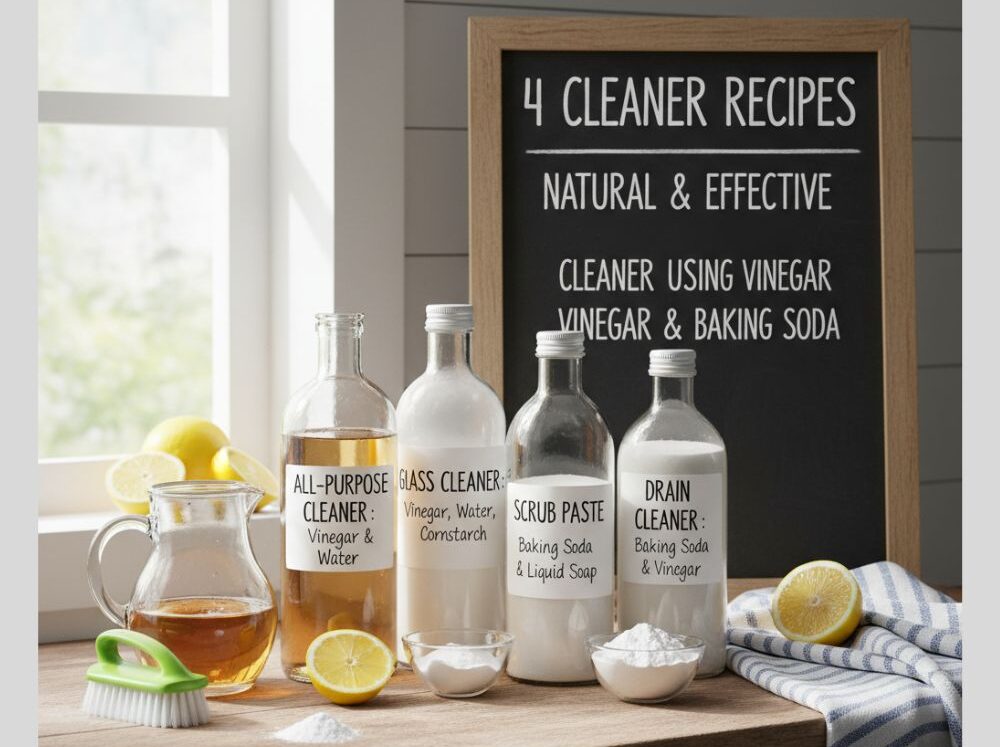
As a Florida homeowner, I face the constant battle against relentless humidity, mildew, and stubborn hard water deposits. Forget the harsh chemicals! My secret weapon for winning the bathroom cleaning war is a powerful, non-toxic duo: vinegar and baking soda. This is a science-backed, homemade cleaning solution offering freedom from expensive, harsh products. This guide covers how to clean bathroom surfaces, specifically in high-humidity environments.
This accessible and highly effective method is non-toxic, child-safe, and budget-friendly. For Florida specifically, this cleaner using vinegar and baking soda directly addresses our unique challenges: the high humidity that fosters mold & mildew, the hard water that causes unsightly limescale, and the warm climate that demands frequent, effective natural cleaning. In fact, research shows a 1:1 vinegar/water mix can reduce over 50% of bacteria in sinks, making a homemade bathroom cleaner a smart, scientifically validated choice for your high-humidity environment. Homemade cleaning solutions are often safer and more effective than commercial products, especially when you need a gentle, yet powerful, natural bathroom cleaner.
Did You Know?
Vinegar’s active ingredient—acetic acid—has been shown in studies to significantly reduce microbes, including certain bacteria and fungi commonly found in bathrooms. According to the National Library of Medicine, a 5% acetic acid solution (standard household vinegar strength) can effectively inhibit the growth of several harmful microorganisms, making it a powerful natural ally in high-humidity environments like Florida.
Source: https://pmc.ncbi.nlm.nih.gov/articles/PMC4808895/
Understanding the Science: How Vinegar & Baking Soda Work
Before we dive into the scrubbing, understanding the simple chemistry behind this cleaner using vinegar and baking soda will empower you to use it effectively. This knowledge is key to mastering bathroom cleaning.
A. Vinegar (Acetic Acid)
Vinegar is nature’s hero. Its acidic power (acetic acid) is perfect for breaking down the stubborn residue that Florida water leaves behind. It dissolves mineral buildup (limescale), effortlessly cuts soap scum, and naturally acts as an antibacterial and antifungal agent—crucial for combating mildew in your how to clean bathroom routine.
B. Baking Soda (Sodium Bicarbonate)
Baking soda is your gentle, but mighty, scrubbing partner. As a mild alkali, it works wonderfully as a gentle abrasive that can scrub away grime without scratching most surfaces. It’s also an exceptional odor neutralizer that lifts soil and breaks down grime, making it the perfect base for any foaming bathroom cleaner.
C. The Chemistry Reaction: Fizzing Power
When you mix acetic acid (vinegar) and sodium bicarbonate (baking soda), you trigger a simple but effective chemical reaction:
Acetic Acid + Sodium Bicarbonate → Sodium Acetate + Water + CO2
The key to this foaming bathroom cleaner is the CO2 (carbon dioxide) release, which is the fizzing action. This effervescence provides a mechanical cleaning power that lifts dirt and helps loosen stubborn gunk from drains, grout, and caked-on soap scum.
D. The Golden Rule of DIY Cleaning
Mix for Lift: The powerful fizzing equals mechanical cleaning power, making it ideal for clearing drains or scrubbing challenging grout lines.
Separate for Power: For maximum cleaning power, often you should use them separately. Vinegar alone is your best disinfectant and descaler, perfect for an overnight showerhead soak. Baking soda alone is your best scouring and deodorizing agent for the toilet bowl or tub. This two-part approach enhances your bathroom cleaning strategy.
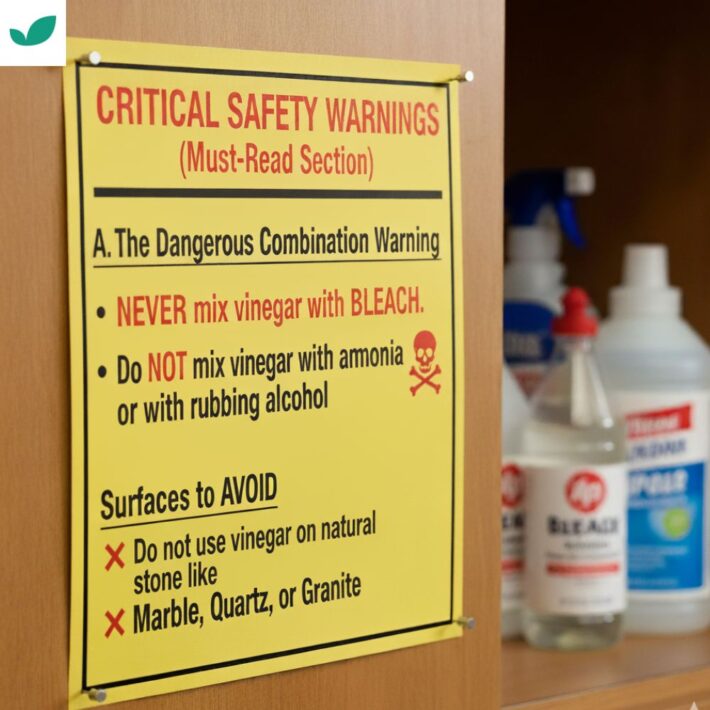
CRITICAL SAFETY WARNINGS (Must-Read Section)
While a cleaner using vinegar and baking soda is safe, non-toxic, and gentle, there are some combinations and surfaces that must be strictly avoided.
A. The Dangerous Combination Warning
NEVER mix vinegar with BLEACH. This combination is extremely dangerous as it creates highly toxic chlorine gas, which can cause severe respiratory injury or even death. Always ensure you are working with a completely clear, water-rinsed surface before applying any vinegar.
B. Other Unsafe Combos and Surfaces to Avoid
- Do NOT mix vinegar with ammonia or with rubbing alcohol, especially if you are keeping a non-toxic theme. Homemade cleaning solutions must be handled with care.
- Surfaces to AVOID: Do not use vinegar on natural stone like Marble, Quartz, or Granite because its acidic nature will etch and dull the stone permanently. Be cautious on unsealed grout (acid can erode it) and avoid abrasive baking soda scrubbing on high-gloss or delicate glass to prevent scratching. This is a critical step in your bathroom cleaning checklist. When making diy cleaning products, always test on a small area first.
Florida-Specific Cleaning Solutions (Mold, Mildew, Hard Water)
These targeted recipes are designed specifically for the unique environment of a Florida bathroom. This is the heart of how to clean bathroom challenges in the south.
A. Tackling Mold & Mildew (Florida’s #1 Bathroom Problem)
Mold and mildew demand a strong, targeted attack. Using a natural bathroom cleaner is often the safest and most effective way to address these issues.
- Required Safety Gear: Always protect yourself. Use an N95 mask (mold spores are airborne), sturdy gloves, and goggles.
- The Mold-Busting Paste Recipe: I use a thick 8 Tbsp Baking Soda + 4 Tbsp Vinegar paste.
- Mix until it foams vigorously.
- Apply a thick, 1/4-to-1/2-inch layer over the moldy area (grout, caulking).
- Allow the paste to dry for 1 hour so the baking soda can pull moisture and the vinegar can penetrate.
- Scrub vigorously, then vacuum the debris into a sealed bag for disposal. Finish by misting the area with pure vinegar to prevent regrowth—a powerful natural bathroom cleaner.
Fighting Hard Water (Common in Florida Homes)
Hard water deposits are where the acid in vinegar truly shines. This is where the cleaner using vinegar and baking soda really proves its worth.
- Faucet Descaling: For cloudy faucets, wrap them tightly with a cloth soaked in a 50/50 vinegar/water mixture. Leave for 2 hours, then remove the cloth. Apply a cleaner using vinegar and baking soda paste for a quick scrub, and then rinse and buff dry.
- Showerhead Revival: Fill a small plastic bag with straight white vinegar. Place it over the showerhead and secure it with a rubber band so the nozzle is fully submerged. Soak overnight. The next morning, remove the bag, sprinkle the head with baking soda, and scrub after the fizz stops. Rinse thoroughly. A homemade bathroom cleaner like this is excellent for scale.
Bathroom Cleaning Recipes (Surface-by-Surface Master Guide)
No need to buy a dozen different products when you have these diy cleaning products. This section is a mini bathroom cleaning checklist.
A. The Ultimate Drain Cleaner (Upgraded With Salt)
This is one of the most effective homemade cleaning solutions for slow drains. I use 1 cup of baking soda and 1 cup of coarse salt (the salt adds an abrasive boost to break up grease), followed by 1 cup of vinegar. Let it sit for 15–60 minutes to allow the chemical and mechanical action to work, then flush with a kettle of boiling water. A strong cleaner using vinegar and baking soda mix is hard to beat.
B. Toilet Bowl Cleaner
For a sparkling clean toilet, spray the inside of the bowl liberally with vinegar. Next, generously sprinkle the surface with baking soda. Spray more vinegar to create a wonderful foaming bathroom cleaner action. Let this powerful mix sit for 5–30 minutes. Scrub all surfaces with a toilet brush and flush. Optional: Add a few drops of tea tree oil to the final rinse for an antifungal boost. This homemade bathroom cleaner makes bathroom cleaning easy.
C. Tub, Shower, Tiles: Heavy Soap Scum Solution
For heavy buildup, which is common with Florida hard water, this method is key. Combine 1–2 cups of hot vinegar with 1 Tbsp of liquid dish soap (the soap cuts grease). Spray this solution heavily onto the scum and let it sit for 15–30 minutes. Follow up with a simple baking soda and water paste scrub. The soap and vinegar loosen the grime, and the baking soda polishes it away. Rinse very well. You are essentially making powerful homemade cleaning solutions yourself.
D. Grout Cleaning
Grout is where the fizz truly cleans. Apply a thick baking soda paste to the grout lines. Spray it with vinegar so that the foaming bathroom cleaner action pushes the dirt out. Let it sit for 10 minutes, then scrub with an old toothbrush.
CAUTION: Always ensure your grout is well-sealed; otherwise, the acid in the vinegar can erode it over time. This targeted bathroom cleaning is very effective.
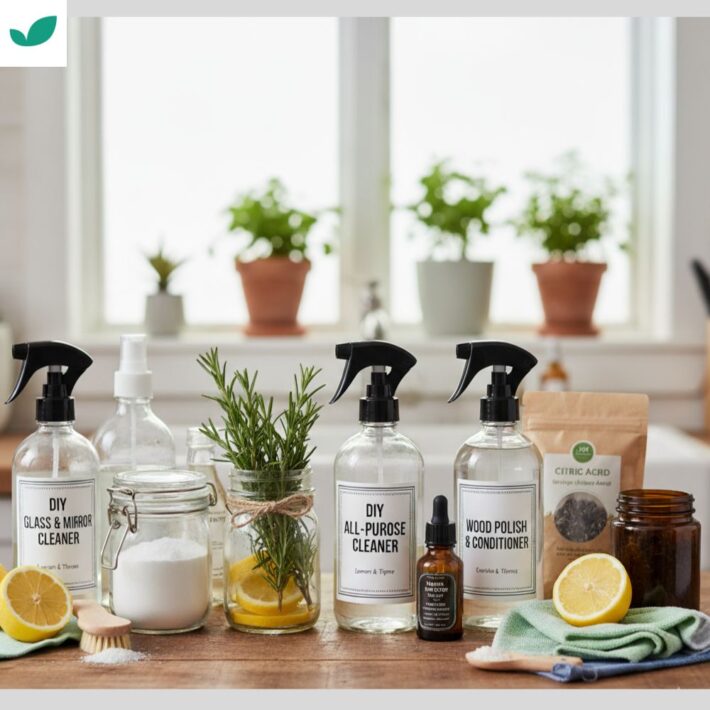
DIY All-Purpose & Maintenance Cleaners
For regular maintenance, I rely on my own homemade cleaning solutions. Using a cleaner using vinegar and baking soda for daily wipe-downs keeps buildup low, reducing the need for deep cleaning.
A. The Gentle Daily Spray (Maintenance)
This is perfect for daily sink and counter wipe-downs. In a glass spray bottle, mix: 1 tsp Baking Soda, 2 tsp Vinegar, ¼ tsp Dish Soap, 1 tsp Lemon Juice, and 2 cups HOT Water. Shake before use. This is a gentle, pleasant-smelling natural bathroom cleaner that keeps major buildup at bay.
B. DIY Disinfectant Wipes
Instead of store-bought, I make my own diy cleaning products. Combine 1 cup of water, ¼ cup of vinegar, and about 10 drops of essential oils (tea tree, lemon, eucalyptus) for their antimicrobial properties. Pour this over a stack of reusable cloth wipes and store them in an airtight container for quick, homemade bathroom cleaner touch-ups. This is a great addition to your bathroom cleaning checklist.
Bonus Cleaning Principles
I follow these principles for consistent results, making my bathroom cleaning routine highly efficient.
Sequential Cleaning Method (Most Effective): This two-step process provides the deepest clean.
- Scrub first with baking soda or baking soda + dish soap (mechanical/abrasive cleaning).
- Rinse the loosened grime away.
- Disinfect last with a final mist of vinegar, allowing it to sit for 5–10 minutes before a final rinse. This ensures a thorough how to clean bathroom result.
Vinegar Soak Method (Descaling Power): This is the best method for any item with hard water scale, such as showerheads, faucets, or mineral deposits on glass. The pure acid needs time to dissolve the minerals. A strong cleaner using vinegar and baking soda is perfect for this.
Storage, Usage & Ventilation Tips
Effective bathroom cleaning involves more than just the solutions.
- Storage: Always use glass spray bottles for storing your homemade cleaning solutions, especially if they contain essential oils, as the oils can degrade plastic over time. Remember to shake before each use, as natural cleaners tend to separate.
- Ventilation: This is vital in humid Florida. Ensure airflow during and after cleaning by opening windows and turning on the exhaust fan.
Final MUST-NOT-USE List
To ensure your safety and the longevity of your bathroom surfaces, please confirm you Do NOT include or mix these ingredients in your vinegar and baking soda routine: Bleach (danger: chlorine gas), Ammonia, Rubbing alcohol, and Borax (unless explicitly for a separate task).
Conclusion: Cleaner Using Vinegar and Baking Soda Is the Perfect Florida Bathroom Solution
By embracing a cleaner using vinegar and baking soda, you are choosing a solution that is safe, affordable, and scientifically validated. This powerful, yet simple, natural bathroom cleaner is perfectly suited to your specific Florida challenges—it’s mold-fighting, hard-water-busting, and completely DIY-friendly. This method of bathroom cleaning and using diy cleaning products is superior. I hope this guide provides you with everything you need for a sparkling, chemical-free home! This is the ultimate cleaner using vinegar and baking soda guide for achieving a spotless home.