7 Best Homemade Mosquito Repellent for Home (Mississippi)
- by Parul Yadav
- November 11, 2025
- 0
- 136

If you live in Mississippi like I do, you already know how relentless mosquitoes can be. Our hot, humid weather creates the perfect breeding ground for these buzzing invaders. Between the sticky summer nights and the still water after every rainfall, mosquitoes find endless opportunities to thrive. Unfortunately, that also means a higher risk of mosquito-borne diseases like West Nile virus, Zika, and Eastern equine encephalitis — all confirmed in Mississippi according to the CDC.
That’s why I turned to homemade mosquito repellent for home solutions. They’re natural, safe, and chemical-free — and they actually work. In this guide, I’ll show you how to make your own DIY natural mosquito repellent using simple ingredients, how to apply it correctly, and how to keep your Mississippi home mosquito-free all season long.
What Is a Homemade Mosquito Repellent for Home & Why Is It Important
A Homemade mosquito repellent for home is a blend of plant-based ingredients that usually include essential oils, vinegar, and other organic compounds that repel mosquitoes without synthetic chemicals like DEET or picaridin. Unlike chemical sprays, these repellents rely on the aroma and active compounds of oils such as citronella, eucalyptus, or lavender to mask human scent and deter bites.
So why should Mississippi homeowners care?
- Safe for kids and pets: You can spray them indoors without worrying about harsh fumes or allergic reactions.
- Environmentally friendly: No toxins seeping into the soil or water.
- Affordable and accessible: Most ingredients can be found in local stores or even your kitchen pantry.
Even the Environmental Protection Agency (EPA) acknowledges that certain natural ingredients — such as lemon eucalyptus oil — can provide effective protection when used properly (EPA source).
Key Ingredients in Natural Mosquito Repellents
Every great homemade mosquito repellent for home starts with a few core ingredients. Here’s what each one does and why it works so well in Mississippi’s climate:
- Essential Oils: Citronella, eucalyptus, lavender, mint, basil, lemongrass, and cedarwood are the backbone of any homemade mosquito repellent for home. These oils contain active compounds that confuse mosquitoes’ sense of smell, making it harder for them to locate you.
- Vinegar: Acts as a natural disinfectant and adds an acidic layer that mosquitoes hate.
- Rubbing Alcohol: Helps essential oils mix evenly and speeds up drying on the skin.
- Distilled Water: Keeps the formula gentle and dilutes concentrated ingredients.
- Witch Hazel: Soothes skin and acts as an emulsifier so oils don’t separate.
Pro Tip: Mississippi’s humidity can cause natural sprays to evaporate quickly. Add a few drops of glycerin or coconut oil to make your repellent last longer.
Pros and Cons of DIY Mosquito Repellents
Pros of DIY Mosquito Repellent
- Safe, non-toxic, and gentle on sensitive skin, making them ideal for families and pets.
- Customizable scents and strength levels, depending on your favorite essential oils.
- Budget-friendly, as most recipes cost less than a few dollars per bottle.
- Multi-purpose, as they can also freshen rooms or double as natural cleaners.
Cons of DIY Mosquito Repellent
- Require more frequent reapplication, especially outdoors.
- Shorter shelf life than chemical sprays.
- Some oils may cause irritation for sensitive users (always patch test first).
Homemade vs Store-Bought:
I prefer homemade mosquito repellent for home because I control every ingredient, customize scents like lavender or mint, and create blends for indoor or outdoor use. It’s affordable and natural. Store-bought sprays last longer and are convenient for travel, but they often contain synthetic chemicals that may irritate sensitive skin or cause strong odors.
How does homemade mosquito repellent for home Work?
Natural repellents rely on essential oil compounds like citronellal, limonene, and eucalyptol, which interfere with mosquitoes’ olfactory receptors. These compounds mask the carbon dioxide and body scent humans release, essentially making you invisible to mosquitoes — a safe, chemical-free defense that blends perfectly with Mississippi’s natural lifestyle.
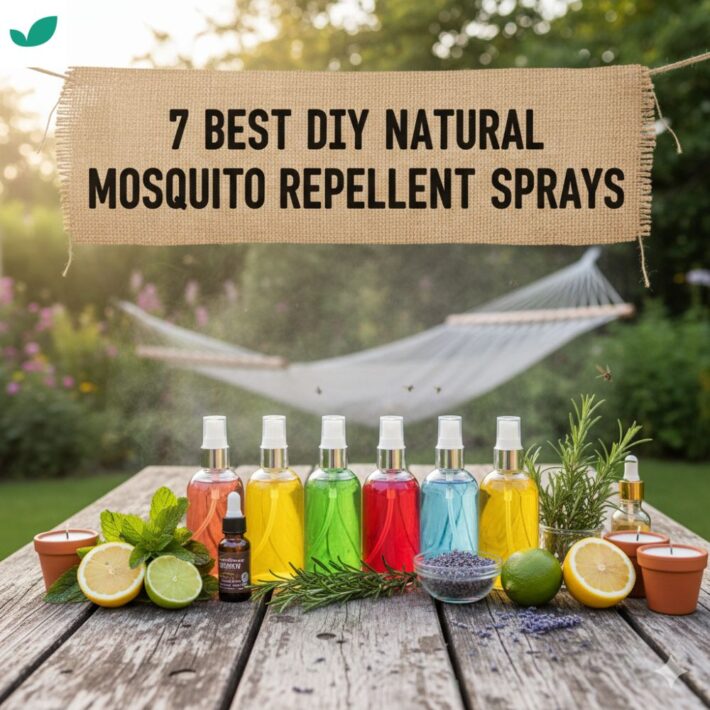
7 Best DIY Natural Mosquito Repellent Sprays
Here are 7 easy, effective, and affordable homemade mosquito repellent for home, you can make right now using ingredients that are easy to find in Mississippi grocery stores, health shops, or even your kitchen.
Citrus & Mint Fresh Spray
Ingredients:
- 1 cup distilled water
- Zest of 2 fresh lemons
- ½ cup fresh mint leaves
- 2 tablespoons witch hazel
- 1 tablespoon vodka (optional, for longer shelf life)
Why It Works:
Citric acid from lemon and menthol from mint create a scent barrier that mosquitoes dislike while leaving a refreshing aroma.
Steps:
- Bring 1 cup of distilled water to a boil.
- Add lemon zest and mint leaves, then simmer for 10–15 minutes.
- Let the mixture cool and steep for another 15 minutes.
- Strain using a fine mesh sieve or cheesecloth.
- Stir in witch hazel and optional vodka.
- Pour into a spray bottle, shake well, and store in the refrigerator.
- Use it on windowsills, door frames, or directly on skin before heading outdoors.
2 Lavender & Eucalyptus Blend
Ingredients:
- 10 drops lavender essential oil
- 10 drops of eucalyptus essential oil
- 2 tablespoons witch hazel
- 1 cup distilled water
Bonus:
Its calming scent promotes relaxation and helps deter mosquitoes indoors — perfect for bedrooms or nurseries.
Steps:
- Combine essential oils and witch hazel in a glass measuring cup.
- Add distilled water and stir gently.
- Pour into a dark glass spray bottle (to protect oils from sunlight).
- Shake before each use.
- Lightly spray on curtains, bedding, or clothing for a gentle and effective indoor repellent.
3 Herbal Shield (Basil, Mint, Witch Hazel)
Perfect For: Patios, kitchens, screened porches, or garden areas.
Ingredients:
- 1 cup water
- ½ cup fresh basil leaves
- ½ cup fresh mint leaves
- 2 tablespoons witch hazel
Steps:
- Bring 1 cup of water to a boil.
- Add basil and mint leaves; simmer for 15–20 minutes.
- Remove from heat and let steep for another 10 minutes.
- Strain and cool completely.
- Add witch hazel and stir.
- Pour into a spray bottle and shake well.
This herbal combination lingers in the air, naturally deterring mosquitoes and leaving a clean, earthy scent around your home.
4 Citronella & Cedarwood Defense
Why It’s Great:
Citronella hides the carbon dioxide humans emit, while cedarwood offers a woodsy note that confuses mosquitoes’ scent receptors, a top natural mosquito repellent for yard evenings and outdoor barbecues.
Ingredients:
- 10 drops citronella essential oil
- 10 drops of cedarwood essential oil
- 2 tablespoons witch hazel
- 1 cup distilled water
Steps:
- Combine both essential oils with witch hazel in a small bowl.
- Add distilled water and whisk or stir until evenly mixed.
- Pour into a spray bottle and shake before every use.
- Spray on patio furniture, deck railings, or outdoor seating areas before dusk.
5 Cinnamon Power Mix
Ingredients:
- 2 heaping tablespoons ground cinnamon
- 1 cup boiling water
- 1 teaspoon rubbing alcohol
- 1 teaspoon mild dish soap
Steps:
- Add cinnamon to boiling water and whisk well.
- Let it steep for 15 minutes, then strain through a coffee filter or cheesecloth.
- Stir in rubbing alcohol and dish soap.
- Pour into a spray bottle and shake thoroughly.
The cinnamaldehyde in cinnamon masks human scent and disrupts mosquito sensors — ideal for outdoor use around doors and entryways.
6 Neem & Coconut Oil Rub
Ingredients:
- 2 tablespoons neem seed oil
- 1 tablespoon olive oil
- 1 tablespoon coconut oil
- 10–15 drops citronella essential oil
Steps:
- If coconut oil is solid, melt it gently using a double boiler.
- Mix all oils together in a glass jar.
- Stir until fully blended and store in a cool place.
- Use an eyedropper to apply a few drops on wrists, ankles, and neck.
Note: Avoid using neem oil if pregnant or trying to conceive, as recommended by Healthline.
7 Lavender–Vanilla–Lemon Combo Spray
Ingredients:
- 10–12 drops lavender essential oil
- 3 tablespoons vanilla extract
- 3–4 tablespoons lemon juice
- 2 cups water
Steps:
- Pour water into a mixing bowl.
- Add lemon juice and vanilla extract, stirring thoroughly.
- Mix in lavender essential oil.
- Transfer to a spray bottle and shake well before each use.
Spray around rooms, on skin, or in mosquito-prone corners. This gentle formula smells amazing and works as both a homemade mosquito repellent for home and a natural air freshener.
Mississippi Tip: Keep small labeled spray bottles near doorways, patios, and outdoor seating areas. Reapply every 2–3 hours during humid evenings for continuous protection.
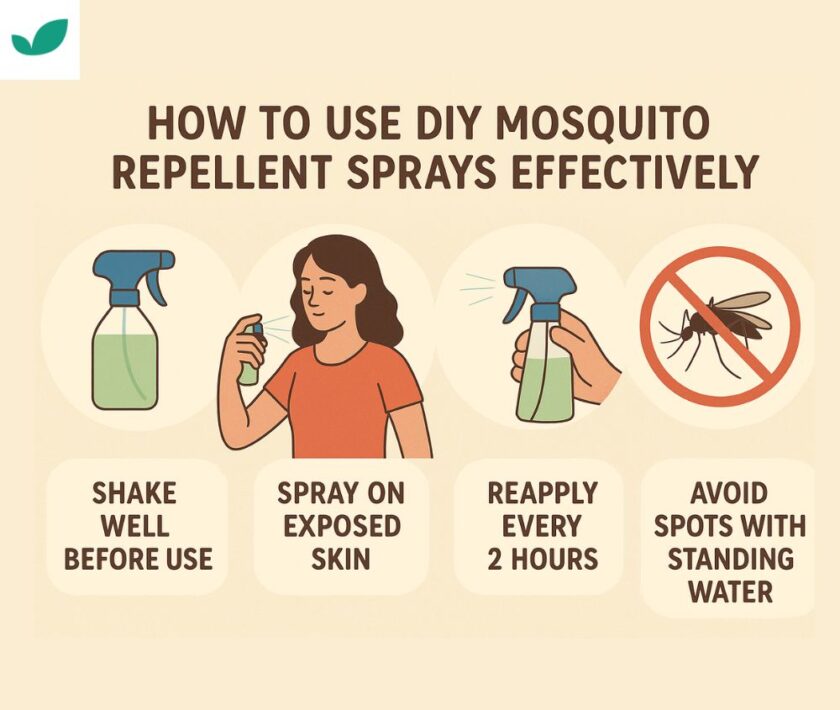
How to Use DIY Mosquito Repellent Sprays Effectively
- Shake well before use: Essential oils separate naturally, so always mix before spraying.
- Apply to exposed skin: Focus on arms, legs, ankles, and neck; avoid contact with eyes and mouth.
- Use before going outdoors: Especially important around dawn and dusk when mosquitoes are most active.
- Spray on clothing: Adds an extra layer of protection, but avoid delicate fabrics like silk or satin.
- Do a patch test first: Apply on a small area to ensure there’s no irritation or allergic reaction.
- Avoid over-application: A light mist is effective — more spray doesn’t mean more protection.
- Reapply regularly: Every 2–3 hours, or after sweating, swimming, or heavy outdoor activity.
- Store properly: Keep the bottle in a cool, dark place to preserve the potency of essential oils.
- Combine with other measures: Eliminate standing water, plant lemongrass and marigolds, and install window screens.
- Watch for sensitivities: If irritation occurs, stop using and rinse skin with cool water.
If you’re wondering how to get rid of mosquitoes in your yard, using these sprays along with a natural mosquito repellent for yard approach like essential-oil misting or citronella candles, will give you double protection.
Safety Notes and Skin Sensitivity Tips
While homemade mosquito repellent for home options are safer than chemical sprays, they still require care:
- Always dilute essential oils before applying them directly to the skin.
- Avoid using tea tree or eucalyptus oils near cats, as they can be toxic.
- Pregnant women should avoid neem and clove oils.
- Store all blends in dark glass bottles to protect them from sunlight and extend shelf life.
Conclusion: DIY Natural Mosquito Repellent
In Mississippi’s warm, mosquito-friendly climate, taking control of your environment is key. By crafting a homemade mosquito repellent for home, you gain safety, affordability, and peace of mind. These recipes are natural, customizable, and highly effective when used consistently.
Try one of these blends tonight and enjoy a mosquito-free Mississippi evening naturally.